

Why Your Garage Door Stops Halfway and Reverses
A garage door that stops halfway and reverses is one of the most common problems homeowners call us about, and it almost always shows up at the worst possible moment. You hit the button, the door starts to close, it travels partway down, then it rolls right back up as if something pushed it away. This behavior looks random, but it rarely is. Your opener is doing exactly what it was built to do, which is reverse the door the instant it senses a problem. Modern openers carry safety features that stop and reverse the door when they detect an obstruction, a broken sensor beam, or unexpected resistance. The good news is that the cause usually traces back to a short list of issues you can identify. In this guide, we break down the real reasons your garage door stops halfway and reverses, and we walk through how to get it closing smoothly again before summer dust and heat make things worse.
Common Reasons Your Garage Door Stops Halfway and Reverses
Your garage door depends on several systems working together to open and close cleanly, including the opener, the safety sensors, the springs, and the tracks. When any one of those systems sends a faulty signal, the opener protects you by stopping the door and reversing it. The cause typically falls into one of three groups: misaligned safety sensors, incorrect opener settings, or a physical obstruction somewhere along the door’s path. Each of these can produce the exact same frustrating result, so the real skill is knowing how to tell them apart. Summer weather in College Station tends to make a few of these problems worse, since dust, pollen, and grime collect quickly on sensor lenses during the dry months. Heat also affects lubrication and can stiffen components that were already worn. Below, we cover the three causes we see most often on service calls across the Brazos Valley.
Misaligned Safety Sensors Cause Your Garage Door to Stop Halfway and Reverse
Every residential garage door opener built since the early 1990s includes a pair of photo eye safety sensors mounted near the bottom of the tracks on each side of the opening. These two sensors send an invisible infrared beam across the doorway, and the opener watches that beam constantly while the door is closing. If anything breaks the beam, the opener assumes a child, pet, or object is in the way, and it reverses the door immediately. This is one of the most important safety features on your system, and it has prevented countless injuries over the years. The sensors must point directly at each other for the beam to connect properly. When they fall even slightly out of line, the opener reads the broken connection as an obstruction and refuses to let the door close all the way.
Misaligned safety sensors are the single most common reason a garage door stops halfway and reverses on the way down. A bump from a trash can, a stray basketball, or even a heavy vibration can knock a sensor off its mark. Once the alignment slips, the door will start to close, sense the broken beam, and roll back up every single time you try. Many openers signal this problem with a blinking light on the motor unit or a steady click, so a flashing indicator is a strong clue. You may also notice the door closing fine when you hold the wall button down, since holding the button can override the sensor on some models. That override is a useful diagnostic trick, but it is never a long term fix.
Dirt and weather make sensor problems far more common during a hot Texas summer. Dust settles on the small lenses, spider webs form across the brackets, and bright afternoon sunlight can wash out the beam entirely when it hits the receiver at the wrong angle. Loose mounting screws and bent brackets also let the sensors drift over time. Moisture and condensation can fog the lenses, and a frayed sensor wire can cut the signal without any visible damage. Cleaning the lenses with a soft, dry cloth and confirming both sensor lights glow steady solves the issue in many cases. If your opener acts up and the sensors check out, the problem likely lives inside the unit itself. Want a professional to diagnose a stubborn opener? Click here for our garage door opener repair service.
Incorrect Limit Settings Make Your Garage Door Stop Halfway and Reverse
Your opener uses travel limits to know exactly where the floor is and where the fully open position sits. These limits tell the motor how far to run in each direction before it stops. When the close limit is set incorrectly, the opener can think the door has hit the floor before it actually has, which makes the door reverse partway down. On the flip side, a limit set too far can drive the door into the floor with too much force, which also triggers the safety reverse. Getting these settings dialed in correctly is what allows the door to seat firmly without slamming or bouncing back up. Older chain drive openers are especially prone to limit drift as their components age.
Limit settings can shift on their own over months and years of normal use, and that slow drift is why a door that worked fine for years suddenly starts reversing. Temperature swings cause metal parts to expand and contract, which can nudge the limit screws out of position. Vibration from daily opening and closing slowly loosens the adjustment screws on many models. A power surge or a battery backup reset can wipe or scramble the saved settings on newer smart openers. When the limit is off by just a small amount, the door may close most of the way and then reverse in the final foot of travel. This partial close followed by a reverse is a classic sign that the limits need attention rather than the sensors.
Closely tied to the limits is the opener’s force adjustment, which controls how much pushing power the motor uses to move the door. If the down force is set too sensitive, the opener will interpret the natural weight and friction of the door as an obstruction and reverse it. This problem grows worse when the door is poorly lubricated, when rollers are worn, or when the springs lose tension and force the motor to work harder. A door that gets stiffer as the seasons change can exceed a borderline force setting and start reversing without any real obstacle in the way. Adjusting force is delicate work, because a setting that is too strong defeats the safety system entirely and can cause injury. The force should always be tuned so the door reverses on a real obstruction but seats cleanly on the floor. We test and balance these settings as part of every opener service we perform.
Track Obstructions That Cause Your Garage Door to Stop Halfway and Reverse
The third group of causes involves something physically interfering with the door as it travels along its tracks. Your opener constantly monitors how hard it has to work, and when the door meets unexpected resistance, the force sensor reverses it to avoid crushing whatever is in the way. A small rock, a piece of hardened debris, or a built up clump of grease in the track can stop a roller cold. The door climbs partway down, hits the snag, senses the resistance, and rolls back up. This same protective response is what keeps the door from coming down on a car bumper or a person, so it is working in your favor even when it feels like a malfunction. Finding the obstruction often means watching the door closely as it moves and noting the exact spot where it stops.
Worn rollers and bent tracks create resistance that mimics an obstruction even when the path looks clear. As rollers age, their bearings wear out, they stop spinning freely, and they start dragging along the track instead of rolling. A track that has been knocked out of alignment, even by a fraction of an inch, will pinch the rollers at a certain point in the door’s travel. Rust and dried out grease add friction that builds up over years of Texas humidity and heat. When the door reaches the tight spot, the added drag pushes the opener past its force limit and triggers a reverse. You might hear grinding, popping, or scraping right before the door changes direction, and that sound usually points straight to the problem area.
Spring problems can also be the hidden culprit behind a door that stops and reverses. Garage door springs do the heavy lifting of counterbalancing the door’s weight, and the opener only provides the final push. When a spring weakens, stretches, or breaks, the door becomes far heavier than the opener was tuned to handle. The motor strains, hits its force limit early, and reverses because it thinks it has met an obstruction. A broken spring is also a serious safety hazard, since the door can fall fast and hard if the opener disconnects. This is not a repair to attempt yourself, because the springs hold enormous stored energy and can cause severe injury when handled wrong. Hearing a loud bang from the garage followed by reversing trouble is a strong sign of a broken spring. Need fast, safe help? Click here for our garage door spring repair service.
How to Fix a Garage Door That Stops Halfway and Reverses
Once you understand the three main causes, fixing a garage door that stops halfway and reverses becomes a matter of working through them in a logical order. Start with the simplest and safest checks, then move toward the items that call for tools and experience. Many sensor and obstruction issues take only a few minutes to resolve, while limit and force adjustments require more care. Spring and track work, on the other hand, should be left to a trained technician for your safety. Below, we cover the practical steps that match each of the causes we just described. Working through them in order saves you time and helps you avoid guessing.
Cleaning and Aligning Sensors to Fix a Garage Door That Stops Halfway and Reverses
The first fix to try when your garage door stops halfway and reverses is cleaning and realigning the safety sensors, since they cause the majority of these problems. Look at the small sensor units near the bottom of each track and find the indicator lights on them. One sensor usually glows to show it has power, and the other lights up only when it receives the beam from across the doorway. If the receiver light is off or flickering, the beam is broken or out of line. Wipe both lenses gently with a soft, dry cloth to remove dust, pollen, and any film that has settled during the summer. Avoid harsh cleaners, since they can scratch or fog the lens surface.
Next, check that both sensors point directly at one another at the same height above the floor. Loosen the wing nut or screw on the mounting bracket just enough to move the sensor by hand, then adjust the angle until the receiver light glows steady and strong. Tighten the bracket once the light holds without flickering. Confirm that nothing blocks the beam, including stored boxes, garden tools, or a leaning bicycle. Make sure direct sunlight is not striking the receiver lens during the time of day you usually close the door, because bright light can overwhelm the sensor. A quick test close after each adjustment tells you right away if the fix worked.
If you clean and align the sensors but the door still reverses, inspect the sensor wires running back to the opener. Look for chew marks from rodents, staples that have cut into the insulation, or wires pinched behind a shelf. Damaged wiring can interrupt the signal even when the lenses and alignment look perfect. Wires that have corroded at the connection points are another common failure in older systems. At this stage, the problem moves beyond a simple cleaning and into electrical territory that benefits from professional tools. A technician can test the circuit, check the sensor voltage, and confirm the opener logic board is reading the signal correctly. This kind of diagnosis prevents you from replacing parts that were never the real issue.
Adjusting Opener Force and Limits to Fix a Garage Door That Stops Halfway and Reverses
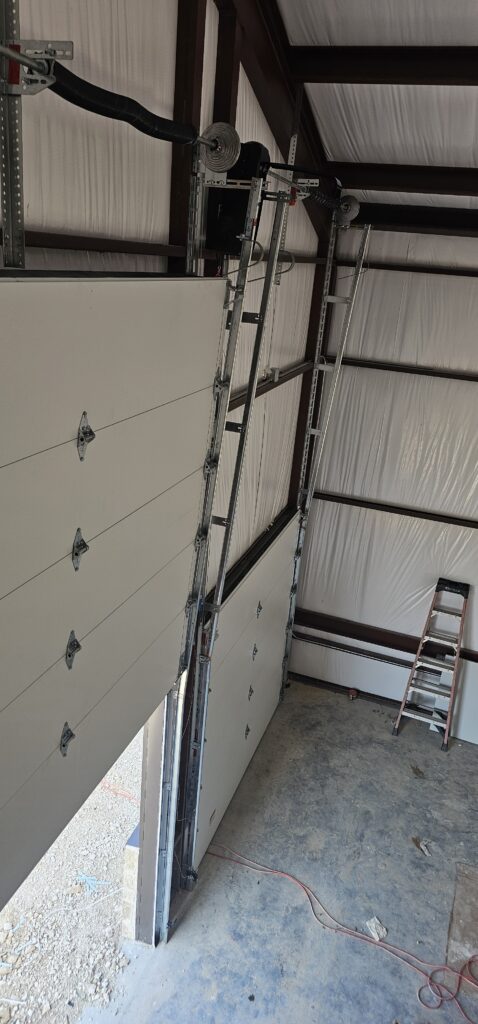
When sensors are not the cause, adjusting the opener’s force and limit settings is the next step to fix a garage door that stops halfway and reverses. Most openers have adjustment screws or digital controls on the back or side of the motor unit, and the owner’s manual shows their exact location. The close limit controls how far the door travels down, and the down force controls how much power the motor uses before it reverses. Small turns make a big difference, so move the adjustments a little at a time and test after each change. The goal is a door that closes fully and seals against the floor without bouncing back. Patience matters here, since rushing the process leads to settings that are either too weak or unsafe.
Be very careful with the down force setting, because it is a true safety control rather than a convenience feature. If you set the force too high to stop the reversing, you disable the opener’s ability to detect a real obstruction. A common test involves laying a solid object such as a roll of paper towels flat under the door, then closing it; a properly tuned opener reverses the moment the door touches the object. The door should never crush the object or keep pushing against it. If you cannot find a setting that both closes the door and passes this reverse test, something mechanical is fighting the opener. That underlying drag usually traces back to lubrication, rollers, or springs.
Good lubrication often solves force related reversing without any setting changes at all. Apply a garage door specific lubricant to the rollers, hinges, and springs, since a dry door creates friction that pushes the opener past its limit. Skip standard grease and household oils, because they attract grit and make the buildup worse over time. After lubricating, run the door a few times by hand with the opener disconnected to feel how smoothly it moves. A balanced door should lift easily and stay put when raised partway. If the door feels heavy, slams down, or fights you, the springs are out of balance and the opener will keep reversing no matter how you set it. Want this dialed in correctly the first time? Click here for our garage door repair service.
Clearing Tracks and Rollers to Fix a Garage Door That Stops Halfway and Reverses
Clearing the tracks and inspecting the rollers is the final do it yourself step to fix a garage door that stops halfway and reverses. Run your eye along both tracks from top to bottom and look for dents, debris, or sticky buildup at the exact point where the door tends to stop. Remove any loose rocks, leaves, or hardened grease you find inside the track channel with a damp rag. Check the rollers to see if they spin freely or if they drag and wobble in their brackets. A roller with a flat spot or a seized bearing will hang up at the same place every time the door passes. Cleaning and lubricating the rollers sometimes restores smooth travel on its own.
Track alignment requires a more careful look, because a track that has shifted will pinch the door at a specific point in its travel. Sight down each vertical track to confirm it stands plumb and that the horizontal sections run level toward the rear of the garage. Look for gaps where the track has pulled away from the wall bracket or where mounting bolts have loosened. Tightening loose hardware can restore alignment, but bent track sections usually need replacement rather than repair. Forcing a bent track back into shape often cracks it or throws the whole system further out of line. This is where many homeowners reach the edge of safe do it yourself work.
If the tracks are clear and aligned but the door still reverses, the trouble almost certainly lives in the springs or cables. These components carry intense tension and counterbalance the full weight of the door, so any handling of them carries real risk. A spring that has lost tension, a cable that has frayed, or a drum that has slipped will all make the door heavy and trigger the safety reverse. You should never adjust, loosen, or remove springs and cables without proper tools and training, because they can release stored energy violently. A technician carries the winding bars, clamps, and replacement parts needed to service these safely. At this point, calling a professional is the smartest and safest choice you can make.
Why You Need Professional Garage Door Repair When Your Door Stops and Reverses
A garage door that stops halfway and reverses is more than an annoyance, because it points to a system that is no longer operating the way it should. Some causes are simple, but others involve high tension springs, electrical faults, and force settings that protect your family from injury. Getting the diagnosis right the first time saves you money, prevents repeat failures, and keeps the safety features doing their job. A trained technician can test every part of the system in one visit and pinpoint the real cause instead of guessing. Secure Overhead Door serves College Station, Bryan, and the wider Brazos Valley with fast, honest repairs. Here is why professional service is the right call when your door stops and reverses.
When to Call a Professional for a Garage Door That Stops and Reverses
You should call a professional for a garage door that stops and reverses any time the problem involves springs, cables, or the opener’s internal electronics. These systems carry serious safety risks and need specialized tools to service correctly. If you have cleaned the sensors, cleared the tracks, and checked the limits but the door still reverses, the cause is beyond a basic fix. A loud bang from the garage, a door that feels suddenly heavy, or a visible gap in a spring all signal a problem you should not touch yourself. Calling promptly prevents a small issue from turning into a complete failure that traps your car inside.
Timing also matters when a door starts acting up during the busy summer season. A door that reverses today may stop working entirely tomorrow, leaving your garage open to heat, pests, and intruders. Quick professional attention restores both convenience and security before the problem grows. Our team offers free estimates, so you can learn the real cause and cost without any pressure. We also provide 24/7 emergency service for the moments when a failure cannot wait.
A professional inspection catches problems you might never notice on your own. While fixing the reversing issue, a technician checks the springs, cables, rollers, and opener for early signs of wear. This kind of thorough look prevents the next breakdown and extends the life of your whole system. You get peace of mind knowing the door is safe for your family and your vehicles. That broader value is exactly what separates a quick patch from a lasting repair.

The Cost of Ignoring a Garage Door That Stops Halfway and Reverses
Ignoring a garage door that stops halfway and reverses almost always costs more in the long run than addressing it early. A minor sensor or limit issue is inexpensive to fix, but the same underlying strain can damage the opener motor over time. Forcing a struggling door to keep cycling wears out the rollers, stretches the springs, and burns out the motor’s components. What starts as a small adjustment can grow into a full opener or spring replacement. Acting early keeps the repair small and the bill low.
Safety is the bigger reason not to ignore the problem. The auto reverse feature exists to protect people and property, and a door that reverses erratically is a sign that safety system is struggling. A door with a weak spring or a worn cable can fall without warning, which puts anyone standing beneath it at risk. Children and pets are especially vulnerable in a garage with an unreliable door. Treating the issue promptly removes that danger from your home.
There is also the matter of daily convenience and security to consider. A door that refuses to close properly leaves your garage exposed to the weather, to wildlife, and to anyone passing by. Texas heat and humidity pour into an open garage and damage stored items over time. The frustration of fighting a stubborn door every morning adds up quickly. A single professional visit ends the hassle and restores reliable operation.
Why Choose Secure Overhead Door for a Garage Door That Stops and Reverses
Secure Overhead Door is the trusted choice for a garage door that stops and reverses across College Station, Bryan, and the surrounding communities. We bring honest service to every call, and we focus on quality work built for long term performance rather than quick fixes. Our technicians diagnose the true cause before quoting any work, so you never pay for parts you do not need. We believe in honest service without unnecessary upselling, which means we recommend only what your door actually requires. That straightforward approach has earned us a reputation for fair, dependable repairs.
We make professional service easy and accessible for every homeowner and business in the area. Our team offers free estimates on repair and installation, plus financing through Hearth for larger projects. We handle both residential and commercial garage door needs, from a single home door to a full bay of commercial units. When an emergency strikes, our 24/7 service means help is only a call away at any hour. You can reach us at (979) 219-2744 to schedule a visit.
Above all, we are dedicated to delivering five star service on every job, because your safety and satisfaction drive everything we do. We stand behind our work and treat your home with the same care we would give our own. Our goal is a door that opens and closes smoothly for years to come, not just for today. Reach out by phone or at derick@secureoverhead.com to get your garage door inspected. Let Secure Overhead Door put an end to the stopping and reversing for good.