

Why Leaves and Debris Wreck Your Garage Door Tracks
Late summer in the Brazos Valley brings a specific kind of mess into your garage, and most homeowners never notice it until the door starts acting strange. Oak leaves, pecan shells, cottonwood fluff, dirt kicked up from dry August ground, and the fine grit that blows in off gravel driveways all collect along the bottom of your garage door tracks. Every time the door opens and closes, the rollers press that material into the track walls and grind it into a paste that mixes with old lubricant. What starts as a small pile of organic matter turns into a hard, gummy buildup that changes how the entire door system behaves. The door begins to shudder on the way up; the opener works harder than it should; the rollers start to skip instead of glide. Homeowners in College Station, Bryan, and Navasota deal with this every year because our tree cover is heavy and our storms push debris straight into open garages. Understanding what that buildup actually does inside the track helps you catch the problem while it is still cheap to fix. This guide walks through the mechanical damage debris causes, the warning signs that show up first, and what a proper cleaning and inspection looks like.
How Debris in Garage Door Tracks Causes Mechanical Damage
Your garage door tracks are precision channels, and they only work correctly when the roller stem sits at the right depth and the roller wheel rides on a clean surface. A garage door track has a tolerance measured in fractions of an inch, so even a small amount of packed debris changes the geometry of the entire system. When a roller cannot seat properly, it transfers force into the hinges, the track brackets, and eventually the door sections themselves. Most homeowners assume a noisy door is just an old door, but noise is almost always a symptom of friction happening somewhere it should not. Debris creates that friction directly, and it creates it unevenly, which means one side of your door starts fighting the other. That imbalance is where real damage begins, and it compounds fast on a door that cycles four or five times a day.
What Leaves and Debris Do Inside Garage Door Tracks
The rollers on a residential garage door are designed to spin freely as the door travels, and that spinning motion is what keeps friction low across thousands of cycles. When leaves, twigs, and grit pack into the track channel, the roller wheel stops spinning and starts sliding, which is a completely different kind of motion with far more resistance. Sliding rollers scrape flat spots into the nylon or steel wheel surface, and once a roller develops a flat spot, it will never roll smoothly again even after you clean the track. The stem also begins to wear against the roller bracket because the load is no longer distributed the way the manufacturer intended. Over a single season of neglect, a set of rollers can go from quiet and functional to worn past the point of repair. Replacing rollers is inexpensive compared to replacing a bent track or a damaged door section, which is why early cleaning matters so much. Homeowners who clear their tracks twice a year almost never end up needing roller replacement outside of normal wear.
The second problem is that organic debris holds moisture, and moisture sitting against steel does exactly what you would expect. Leaves trap humidity from summer storms and morning dew against the inside face of the track, and that trapped water starts oxidizing the metal from the inside out. Rust inside a track does not just look bad; it creates a rough, pitted surface that catches the roller wheel on every pass. Once rust develops, cleaning alone will not restore smooth operation because the damage is now part of the track surface itself. In our part of Texas, the combination of high humidity and heavy tree litter makes this a genuine seasonal issue rather than a rare one. Garages that stay open during the day collect the most debris and show rust damage the fastest. A track that has begun to pit usually needs replacement, and track replacement requires the door to be fully unloaded and realigned.
There is also a lubrication issue that most people get backward. Garage door tracks are not supposed to be lubricated; the rollers, hinges, springs, and bearings are. When homeowners spray lubricant into the track channel, it becomes an adhesive that captures every leaf fragment and dust particle that enters the garage. The result is a thick black sludge that hardens into a crust along the track floor and forces the rollers to climb over it on every cycle. This is one of the most common causes of a door that jerks or stutters partway through its travel. Cleaning that sludge out requires solvent, a rag, and patience, and it has to be done without knocking the track out of alignment. If your tracks look black and greasy rather than clean and dry, that buildup is actively working against your door right now.
Why Debris Buildup Bends Garage Door Tracks and Brackets
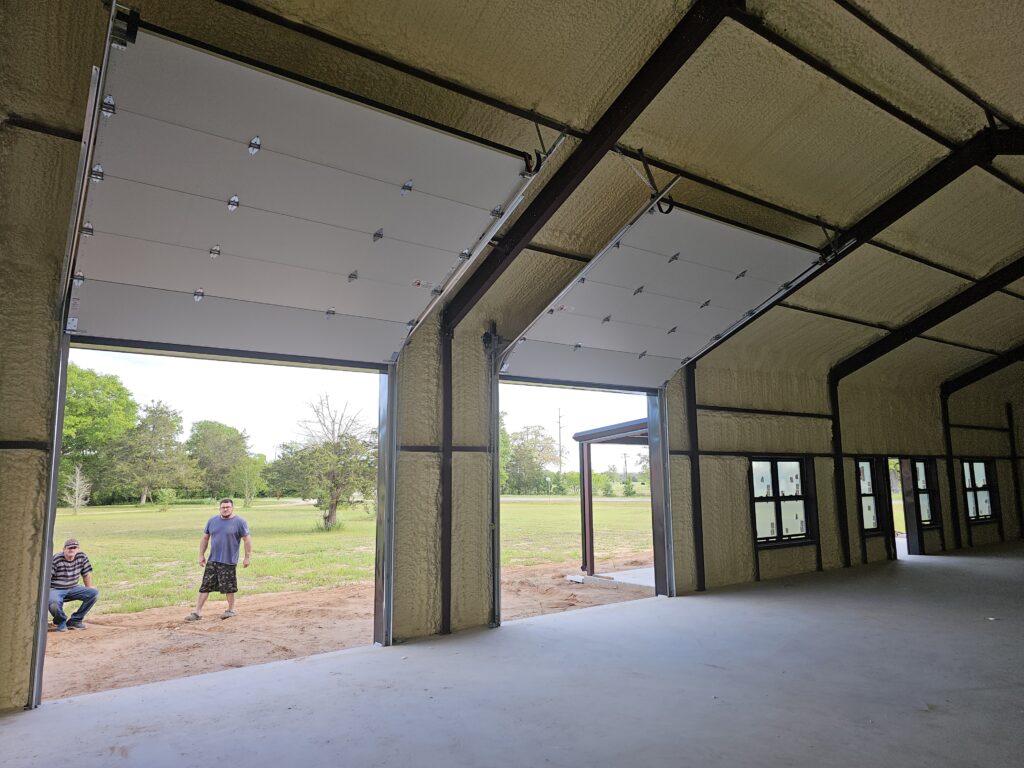
A garage door opener does not know that something is blocking the path; it only knows how much force it has been programmed to apply. When a roller hits a compacted clump of debris, the opener pushes harder to complete the cycle, and that extra force has to go somewhere. It travels through the door sections into the track brackets bolted to your framing, and those brackets are the weakest link in the chain. Repeated force events loosen the lag bolts holding the brackets to the jamb, and a loose bracket lets the track shift slightly out of position. Once the track shifts, the roller sits at a different angle, which increases friction even further and accelerates the whole problem. This is a feedback loop, and it moves faster than most homeowners expect.
Vertical track sections take the most abuse because that is where debris naturally settles under gravity. The bottom eighteen inches of each vertical track collects the majority of leaves, dirt, and small rocks that enter your garage. That happens to be the same section that carries the most load when the door is closed and the springs are under full tension. A vertical track that gets pushed out of plumb by even a quarter inch will cause the bottom roller to bind every single time the door closes. You will often hear a distinct pop or bang at the very end of the closing cycle, which is the roller forcing itself into a misaligned channel. Left alone, that binding will eventually crimp the track lip or pull the bracket loose from the wall entirely.
The horizontal track and the curve where vertical meets horizontal present a different failure mode. Debris that gets carried up by the rollers tends to collect at the transition curve, where the track changes direction and the roller is already under increased stress. Buildup at the curve causes the door to hesitate right as the top section rounds the corner, and that hesitation puts uneven tension on the lift cables. Uneven cable tension is one of the leading causes of a door coming off track completely, which is a serious safety issue and an expensive repair. A door that has jumped its track can damage sections, bend the track beyond repair, and strain the opener carriage. If your door pauses or shudders at the curve, that is worth addressing before the next storm season. Need help with a door that is binding or coming off track? Click here for our garage door repair service.
How Track Debris Damages Garage Door Openers and Springs
Your opener is sized for a balanced door, and a balanced door should be liftable by hand with moderate effort. When debris increases the friction in the track system, the opener has to overcome resistance it was never rated for, and that resistance shows up as heat and wear in the motor. Chain drive and belt drive openers respond differently, but both suffer from the same underlying problem of sustained overload. The gears inside a residential opener are typically nylon, and nylon gears strip when they are asked to deliver more torque than the design allows. A stripped gear means the opener runs but the door does not move, which is one of the most common opener failures we see. That failure is often preventable because the root cause was friction in the tracks rather than a defect in the opener.
Springs experience the same problem from the opposite direction. Torsion springs are wound to counterbalance a specific door weight, and they are rated for a set number of cycles under normal operating conditions. Added friction effectively increases the working load on the spring, which means the spring reaches its fatigue limit sooner than the cycle rating would suggest. A ten thousand cycle spring on a clean, well maintained door can last well over a decade in a typical household. That same spring on a door fighting packed tracks might fail in half the time, and spring failure is sudden rather than gradual. When a torsion spring breaks, the door becomes dangerously heavy and the opener has no chance of lifting it safely.
There is a safety dimension here that goes beyond equipment cost. Modern openers include force settings and auto reverse features designed to stop the door if it meets an obstruction. Debris that increases baseline friction can cause nuisance reversals, and the common homeowner response is to increase the force setting to make the problem go away. Raising the force setting defeats the safety mechanism that protects children, pets, and vehicles from a closing door. That adjustment turns a maintenance issue into a genuine hazard, and it is one of the more dangerous shortcuts we encounter in the field. The correct fix is always to remove the friction, not to overpower it. If your opener is reversing, straining, or running without moving the door, click here for our garage door opener repair service.
Warning Signs of Debris Damage in Garage Door Tracks
Debris problems announce themselves well before they turn into failures, and the signs are easy to recognize once you know what to listen and look for. Most homeowners walk past their garage door twice a day without ever actually watching it operate, which is how small issues go unnoticed for months. Spending sixty seconds observing a full open and close cycle will tell you most of what you need to know about track condition. You are looking for changes in sound, changes in speed, and any visible movement in the track or brackets. A healthy door sounds consistent from top to bottom and moves at a steady rate throughout its travel. Anything that varies, catches, or repeats in the same spot every cycle points to a specific mechanical cause worth investigating.
Sounds That Signal Debris in Your Garage Door Tracks
Grinding is the most common sound associated with track debris, and it usually means a roller is sliding rather than rolling. The sound tends to be continuous rather than intermittent, and it often gets louder as the door picks up speed in the middle of its travel. Grinding is distinct from squealing, which typically indicates a dry roller bearing or hinge that needs lubrication rather than a blocked track. Learning to tell those two sounds apart saves you from applying the wrong fix and making the situation worse. If the sound changes after you clean the track, debris was at least part of the cause. If it persists on a clean track, the rollers themselves have likely worn past the point where cleaning helps.
Popping and banging sounds that occur at the same point in every cycle indicate a localized obstruction or a misalignment. The consistency is the key detail here, because random noises usually come from loose hardware while repeating noises come from a fixed problem in the track path. Mark the door position where the noise happens and inspect that exact section of track with a flashlight. You will frequently find a compacted wad of leaves, a small rock, or a rust patch right at that spot. Removing the obstruction often eliminates the sound immediately, which confirms the diagnosis without any guesswork. Noises that continue after cleaning point toward bent track, worn rollers, or a bracket that has shifted.
Rattling that increases over time deserves attention because it usually means fasteners are working loose. Every impact from a roller hitting debris transmits vibration into the brackets, hinges, and track splices, and those vibrations back out bolts over hundreds of cycles. A rattling door is telling you that its hardware is no longer holding the assembly in the position it was installed in. Tightening those fasteners is straightforward, but it should be done as part of a full inspection rather than in isolation. If bolts have been loose for a while, the holes may have elongated and the bracket may need to be relocated slightly. Ignoring rattle is how a minor alignment issue becomes a door that comes off track during a routine closing.
Visual Signs of Debris Damage on Garage Door Tracks
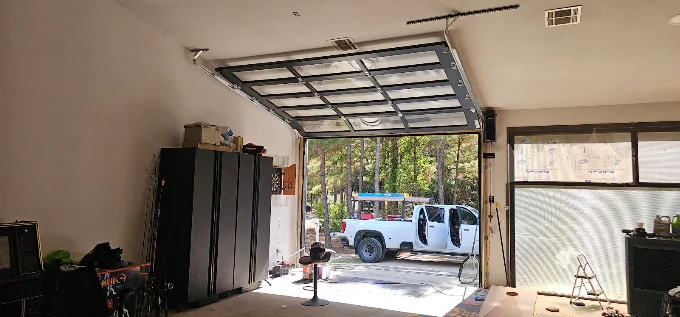
Start your visual inspection with a flashlight aimed down the length of each vertical track from the bottom. Clean track has a uniform silver or galvanized appearance with a smooth, unbroken channel surface. Debris damage shows up as dark streaks, black greasy buildup, orange rust patches, or visible piles of organic material at the base. You should also look at the track lip, which is the edge that keeps the roller captured in the channel. A lip that appears flared, crimped, or dented has been impacted by a roller under load and is no longer holding the roller securely. That kind of damage does not repair itself and generally requires section replacement.
Next, examine the rollers themselves by looking at them through the gap between the track and the door section. Nylon rollers should look round and smooth with no visible flattening on any part of the circumference. Steel rollers should spin freely when you nudge them with a finger while the door is closed and the spring tension is holding the weight. A roller that does not spin at all, or one that wobbles noticeably on its stem, has already sustained damage from friction. Check every roller rather than just the accessible ones, because the top rollers often show wear first due to the curve transition. Replacing all rollers at once is standard practice since they wear at similar rates and mixing old with new creates uneven operation.
Finally, inspect where the track brackets meet the door jamb and the ceiling framing. Look for gaps between the bracket and the wood, shiny metal around bolt heads, or wood that appears splintered around a lag screw. Those are all indicators that the bracket has been moving under load, which means the track position is no longer stable. Also check the gap between the door section and the track along the entire height of the door, since that gap should stay consistent from top to bottom. A gap that widens or narrows at any point means the track is not parallel to the door, and the rollers are working at an angle. This is exactly the kind of problem that debris causes and that a proper service visit corrects. Curious what else your garage door sounds are telling you? Click here to explore our garage door repair resources.
Seasonal Timing for Garage Door Track Cleaning in Central Texas
Late summer and early fall are the highest risk period for track debris in the Brazos Valley, and the reason is straightforward. August and September bring drought stress that causes trees to drop leaves early, followed by thunderstorms that blow that material into open garages at high speed. Homeowners who keep the garage door open during evenings and weekends collect far more debris than those who keep it closed. Pecan trees are particularly hard on garage doors because the shells are hard, small, and exactly the right size to wedge into a track channel. Oak leaves are worse in a different way because they hold moisture and break down into a fibrous mat that packs tightly. Knowing which trees surround your property helps you predict how often you need to clean.
Spring brings a second wave from pollen, seed pods, and the fine yellow dust that coats everything in this region for several weeks. Pollen mixes with any lubricant residue in the track and forms a sticky film that attracts additional debris throughout the summer. Cleaning in late spring removes that film before it hardens and before summer heat bakes it onto the track surface. Heat matters more than people realize, because a garage in Central Texas can exceed one hundred twenty degrees in July and that temperature changes the consistency of any grease present. Material that was soft and manageable in April becomes a hardened crust by August. Two cleanings a year, timed for late spring and early fall, handle almost every situation.
Storm season deserves its own consideration because heavy wind drives debris much deeper into the track assembly than normal accumulation does. After any significant storm, take a look at both vertical tracks and clear anything that blew in, even if the door seems to operate normally. Wind driven grit works its way into roller bearings where you cannot see it, and that is where the most expensive damage happens. It is also worth checking the bottom weather seal at the same time, since a damaged seal lets debris blow directly into the track path. A door that has been operated repeatedly with debris in the track after a storm can accumulate months of wear in a matter of weeks. Ten minutes of attention after a storm prevents a service call later.
Why You Need Professional Garage Door Track Service
Cleaning debris out of a track is something most homeowners can handle safely with a rag, a brush, and a mild solvent. Correcting the damage that debris has already caused is a different job entirely, because it involves components under extreme tension and alignment tolerances measured in fractions of an inch. Torsion springs store enough energy to cause serious injury, and cable and track work requires those springs to be managed correctly. A professional inspection also catches problems you would not know to look for, including hinge wear, cable fraying, bearing play, and opener force settings that have drifted out of spec. Secure Overhead Door serves College Station, Bryan, Navasota, Brenham, Caldwell, Hearne, and Madisonville with a focus on fixing the actual cause rather than treating the symptom. Getting the track system right protects every other component in the door.
What Professional Garage Door Track Service Includes
A proper track service begins with a full operational assessment before anyone touches a tool. The technician runs the door through complete cycles, listens for irregularities, watches roller behavior, and checks door balance with the opener disconnected. Balance testing tells you immediately if the springs are still doing their job or if the opener has been compensating for a heavy door. That single test often reveals problems that have nothing to do with debris but everything to do with why the door has been failing. The assessment establishes what actually needs to be corrected rather than guessing based on the initial complaint.
Cleaning follows, and it goes well beyond wiping out the visible portion of the vertical track. Technicians clear the full channel length including the curve and horizontal sections, remove hardened lubricant residue with appropriate solvent, and clean roller stems and bearing surfaces. Any rollers showing flat spots, wobble, or seized bearings get flagged for replacement rather than returned to service. Hinges and bearing plates receive proper lubrication with a product formulated for garage door hardware, applied only where it belongs. The tracks themselves are left clean and dry as the manufacturer intends.
Alignment and hardware correction complete the service. Every track bracket gets checked for tightness and position, and tracks are verified plumb and parallel to the door along their full length. Loose lag bolts are replaced or relocated into solid wood rather than simply tightened into a stripped hole. Opener force and travel limits are tested and set correctly so that the safety reverse functions the way it was designed to. The result is a door that operates quietly, safely, and with far less strain on the springs and opener.

When Debris Damage Requires Garage Door Repair or Replacement Parts
Some track damage crosses the line from maintenance into repair, and knowing where that line sits saves money and prevents unsafe situations. A track with a crimped lip, a visible bend, or significant internal rust pitting cannot be restored by cleaning or straightening. Attempting to bend a track back into shape work hardens the steel and creates a weak point that will fail again under load. Replacement of the affected track section is the correct answer, and it requires unloading the door safely before any track hardware comes off. This is not a job to attempt with the springs under tension.
Rollers, hinges, and cables often need replacement alongside the track when debris damage has gone on for a while. Frayed cables are especially urgent because a cable failure drops one side of the door instantly and can bend sections or injure anyone nearby. Hinges that have elongated bolt holes allow the section to shift, which throws off roller alignment even after the track is corrected. Replacing these components as a set restores the geometry the door was built with rather than leaving mismatched wear in the system. Parts are inexpensive relative to the labor of a second visit.
Spring replacement enters the picture when added friction has consumed the spring’s cycle life prematurely. A spring that has visible gaps in the coil, rust between coils, or a door that will not stay put at the halfway point is telling you its remaining life is short. Replacing springs proactively during a track repair costs less than an emergency call after a break, and it eliminates the risk of a sudden failure. Springs should always be replaced in pairs so the counterbalance stays even across the door. Dealing with a broken spring or a door that will not stay open? Click here for our garage door spring repair service.
Why Choose Secure Overhead Door for Garage Door Track Repair
Secure Overhead Door operates out of 360 Graham Rd Suite 112 in College Station and serves homeowners and businesses throughout the Brazos Valley. We handle residential and commercial garage door work, and we offer free estimates on repair and installation so you know the cost before any work begins. Emergency service is available twenty four hours a day because a door stuck open is a security problem that will not wait until Monday. Financing is available through Hearth Financing for larger repairs and replacements. Every job is approached with the goal of long term performance rather than a quick patch.
Honest service means we tell you when a cleaning and a set of rollers will solve the problem instead of pushing a full replacement you do not need. It also means we tell you plainly when a track or spring has reached the end of its usable life, because leaving a dangerous component in service helps nobody. Our technicians explain what they found, show you the affected parts, and give you the information to make your own decision. That approach has built our reputation across College Station, Bryan, and the surrounding communities. We are not interested in selling you something twice.
We work on residential doors, commercial overhead doors, dock levelers, and hangar doors, which means our technicians understand door systems well beyond basic homeowner service. That depth of experience shows up in the quality of diagnosis on a residential track problem. Call us at (979) 383-2445 or email derick@secureoverhead.com to schedule an inspection. We are committed to five star service on every call, and we back that with work that holds up over time. Ready to get your tracks cleaned and your door running right? Click here for our garage door repair service.